
5 Most Important Exercises.

There are no shortage of exercises to add variety to you workout – and switching things up can prevent a stale workout and plateaued results. By incorporating kettlebells, changing the base of stability, taking a new class or trying new exercises, it’s easy to keep you workout fresh and challenging.

Having said that, there are five tried and true exercises that every workout regime should include. These exercises have passed the test of time and have been used by bodybuilders, powerlifters and workout enthusiasts for generations.
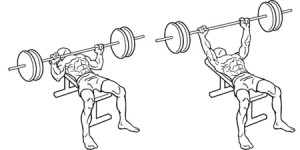
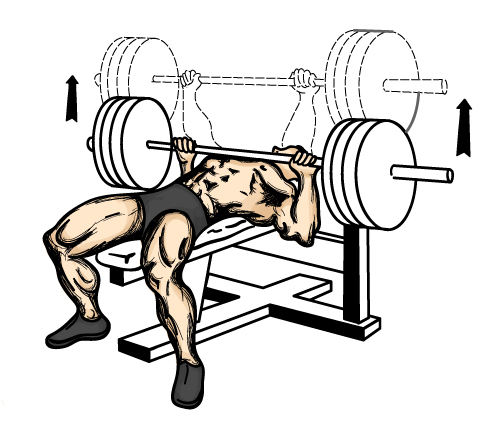
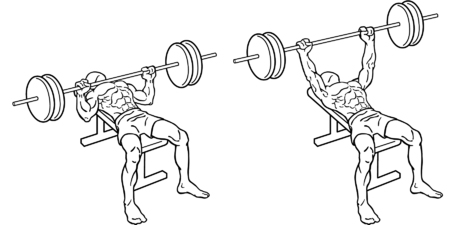
  1. Bench press. The godfather of strength training, any gym worth your time will have a handful of bench presses. Some are flat, some are inclined and some are declined – but all are a great way to build strong and powerful chest muscles. In fact, the bench press is one of the three lifts in the sport of powerlifting. Though this exercise primarily works your pectoralis major muscle (i.e., your pecs), supporting muscles like the anterior deltoids, serratus anterior, coracobrachialis, scapulae fixers, trapezii, and the triceps are also trained.
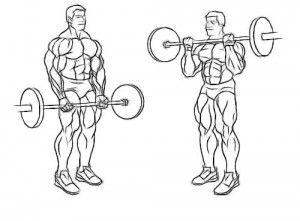
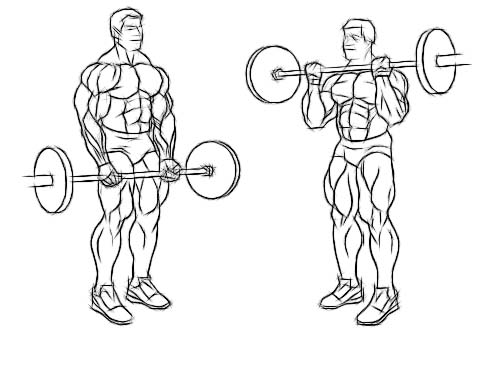
  2. Barbell bicep curl. Of all the bicep exercises that I’ve tried, none compare in their effectiveness to the barbell bicep curl. By adding a barbell, you’re able to increase the amount of resistance that your muscles work against – and the results speak for themselves. Though you’ll primarily work your biceps brachii muscles, your brachialis (lower biceps) and brachioradialis (forearm) are also trained.
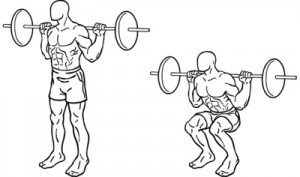
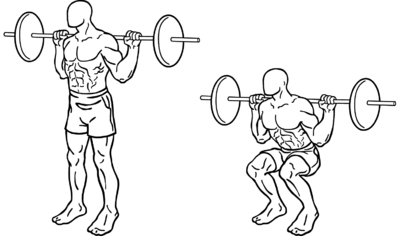
  3. Squats. Want a bigger and stronger butt? No exercise compares to the squat in its effectiveness. Also performed in powerlifting, squats primarily work your gluteus maximus, quadriceps and hamstrings. Your erector spinae, transverse abdominus, gluteus medius, gluteus minimus, adductors, soleus and gastrocnemius will also get some love. Proper form is essential for a safe and effective squat, so it’s important to do your homework or consult with a trainer before you jump into your gym’s squat rack or power cage.
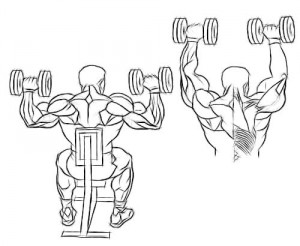
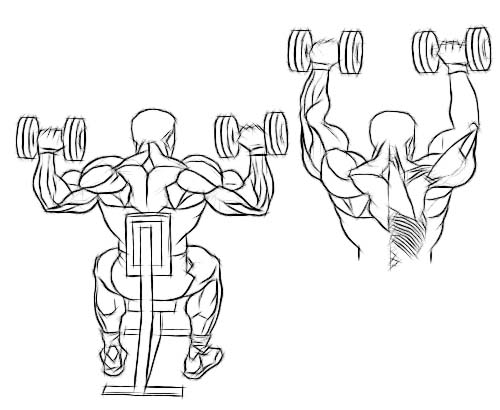
  4. Shoulder press. Sometimes called the overhead press, there are innumerable variations of this popular exercise. In terms of building size or strength, there are no shoulder exercises that can touch the effectiveness of a good barbell or dumbbell shoulder press. Specially, this exercise is great for your deltoids – but it also engages your triceps brachii and trapezius muscles.
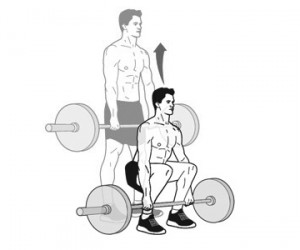
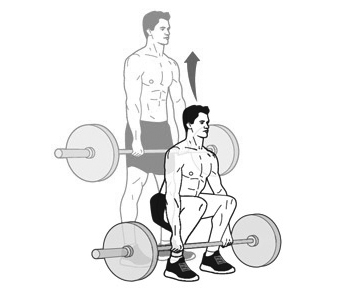
  5. Deadlift. Also one of the three powerlifting exercises, the deadlift is a compound exercise that engages a large number of muscles including your latissimus dorsi, trapezius, erector spinae, gluteals, hamstrings, quadriceps and hip flexors. In other words, your leg, butt and back muscles will all be screaming after a good set of deadlifts. Even your forearms, to a lesser degree, and obliques will be engaged. Though the deadlift is extremely effective, it’s not for everyone. For individuals with back injuries or certain joint issues, other exercises may be a better fit.
Of course, you don’t want to do each of these exercises in every workout. It’s best to break your gym sessions out so that each workout targets different muscle groups. Incorporate the bench press on a chest day, the barbell bicep curl on arm days and so on.

In my opinion, these are the top five exercises to include in any workout regime – but I’d love to hear what you think. Which five exercises top your list? Let me know in the comments below.
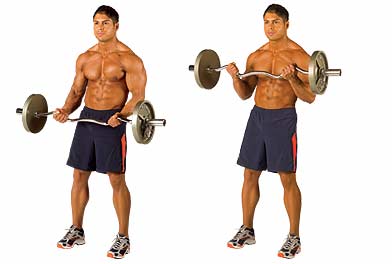
EZ Bar Vs. Barbell: Which is Better?

Using the EZ bar for bicep curls makes the exercise easier - but less effective.

Barbell bicep curls are the most effective bicep exercise that you can do. Period. But what’s the difference between doing the curls with a typical straight barbell or the EZ bar?

EZ bars look like curved or bent versions of a typical barbell; they allow the palms to take a less supinated (upward), more natural position when curling. This helps ease the wrist or elbow pain that some lifters experience on a typical barbell. In short, the EZ bar makes curling a bit easier and less painful.

However, it comes at a price. As an experiment, make a fist with your right hand, palm facing upward. Hold your arm as though you were about to do a curl with a 90 angle in your bent elbow. Look at your bicep. It should be flexing. Now slowly rotate your palm inward about 45 degrees – mimicking the grip on an EZ bar. You’ll notice that the bicep flexing decreases, and that some of the contraction moves into your forearm. This is precisely the problem with the EZ bar; it’s not as effective for bicep curls.

If using the typical straight barbell doesn’t result in wrist or elbow pain during your workout, stick with it. The straight barbell will give you a better workout – and better results. But for those individuals experiencing discomfort, the EZ is a great alternative.

The Most Effective Bicep and Chest Exercises.

Dear Davey,

I want to get my chest/pecs to pop out more. Any suggestions on what exercises that may help with that? I work both my chest and biceps vigorously to get them bigger, but nothing seems to work. Can you help me out?

From,
Keith

Dear Keith,

This is actually a really common question – and it’s one that I get a lot.

Interestingly, the two most effective exercises for biceps and chest are barbell bicep curls and the bench press, respectively. While both of these exercises are definitely old school, they are tried, tested, true – and effective.

A barbell bicep curl, pictured to the right, is pretty straightforward. Simply load a barbell with weight plates. Stand in an upright position with an underhand grip. Contract your biceps to pull the barbell up toward your shoulders. Pause, lower and then repeat.

The bench press is also pretty simple – though it’s always a good idea to work with a spotter. Load the bench’s barbell with weight plates. Lie on the bench and hold the bar just beyond shoulder width apart. Lift the barbell off of the rack, and lower until it touches your chest lightly. Then, press the barbell away from the chest until arms are extended. Pause, then repeat.

Since you’re going for size, it’s important to use the right amount of weight. Use enough resistance so that you’re only able to do between 6 and 10 repetitions of each exercise before your muscles are fully fatigued. If you can do more than 10 repetitions, the weight it too light. Moreover, keep pushing yourself to heavier and heavier levels of resistance; your muscles won’t grow unless they are forced to do so.

If you don’t have access to a gym or equipment, push-ups are a great bench press alternative. To make push-ups more challenging, try some of my push-up variations. Or strap on a backpack loaded with extra weight. This will help force your muscles to grow.

The best at-home bicep exercise is a chin-up. You could buy a chin-up bar at a local exercise supply store. Most can be installed quickly in a doorway in your home. Or, you can take your workout outside – and perform chin-ups on playground equipment. To make it harder, you can even make use of ankle weights.

Hope that helps!

Love,
Davey

How to Get Veins to Pop on Your Biceps…

Veiny arms are determined by both genetics and body fat.

Dear Davey,

Something tells me it’s genetic, but I want those bad ass bicep veins!

A friend of mine has them and he doesn’t do any of the lifting and cardio that I do. Am I not lifting enough? Am I not running enough? Please help, Davey Wavey, it’s almost beach season.

Yours truly,
Nardo90

Dear Nardo90,

Getting visible veins wasn’t something that the instructors taught us during my personal training courses, but I know where you’re coming from. It’s admittedly superficial, but still quite sexy. Beyond the biceps, I also enjoy veins in the area just below the lower abs, leading down to the crotch. Shallow? Yes. But also a bit delicious.

First things first, the amount to which your veins “pop” is determined by both your genetics and your body fat percentage. Since you can’t change your genes, it makes sense to focus on what you can control: Leaning yourself out. To make your veins highly visible, target a body fat percentage of 6% – 8% through a combination of strength training (increased muscle mass will incinerate calories), cardio (especially interval training) and proper diet. At 9% – 12% most major veins should be visible.

While veins in the forearms are easier to achieve, it’s much more difficult with the biceps, triceps and shoulders. It will take time and dedication, but if it’s very important to you – it’s possible to make it happen.

Also, keep in mind that veins are more visible after you exercise and when your body is dehydrated. While I don’t recommend dehydration as a tactic – as it’s actually very detrimental – it is how many body builders achieve the effects you see in pictures and in magazines. That, and sometimes a little help from Photoshop. :-)

Love,
Davey

What is Progressive Overload?

Many fitness enthusiasts are fairly committed to the gym and working out, but often perform the same routines with the same weights over and over again. They don’t see any changes in their bodies or increases in strength, and often excuse their lack of results with the mistaken belief that it takes many years to see any real changes.

As it turns out, the human body doesn’t change unless it is forced to do so. If your body doesn’t need to adapt by getting bigger or stronger, then it won’t.

Enter a concept known as progressive overload. Developed by Thomas Delorme, M.D. to help rehabilitating World War II soldiers, progressive overload is the the gradual increase of stress placed on the body during exercise training.

The concept is beautifully simply and scientifically proven: In order for a muscle to grow, it must be overloaded. Doing so activates the natural adaptive processes of the human body, which develops to cope with the new demands placed on it. In addition to stronger and larger muscles, stronger and denser bones, ligaments, tendons and cartilage are all resulted through progressive overloads.

There are 7 techniques to incorporate progressive overloads into your workout:

  1. Increase resistance. This means lifting more weight. If you normally do 8 repetitions, but are now able to do 9, it may be time to increase the weight. If you are new to working out, you may be able to increase weight by 5% – 10%. If you are more advanced, 2% – 5% may be more appropriate.
  2. Increase repetitions. If you normally do 6 repetitions of an exercise, try for the 7th rep. Once you can do the 7th rep, try for the 8th.
  3. Increase the sets. If you normally do 2 sets, try for a 3rd set. While the first set will get you a majority of the results and benefits, there are some additional benefits that can be yielded from additional sets. I generally don’t do more than 4 sets.
  4. Increase frequency. If you train your legs every 10 days, perhaps you can train them more often. It’s generally unwise to train a muscle that is still sore from a previous workout, but there may be an opportunity to hit certain muscle groups – especially those that are lagging – more frequently.
  5. Increase intensity and effort. Instead of going through your workout like a zombie, really crank up the effort. Sometimes working with a good partner or trainer can be a big help. Push yourself – or find someone that can do the pushing for you!
  6. Increase exercises. Maybe you do 3 different exercises for your biceps, or any other muscle group. Try introducing a 4th or 5th exercise to yield increased results.
  7. Decrease rest time. By doing more exercises in the same amount of time, your body will have to work harder and more efficiently.

You’ll need to map these 7 techniques to your exercise goals. For example, increasing the resistance is great for people that want larger muscles. Increasing the repetitions or decreasing rest time may be better suited for people that want increased definition or endurance training.

Whatever your goals, make this powerful time-tested technique work for you.

Crazy New Ab Exercise: Double Plate Press!

Truth be told, the double plate press isn’t just an ab workout. It works your chest, forearms, biceps and shoulders – but I feel most of the burn in my abs.

I freaking love it!

Here’s how you do it:

  1. Locate two identical weight plates. Start small – with 5 lb weight plates. You really don’t need a lot of weight to feel this.
  2. Press the two weights together, holding them close to your chest. The smooth side should be facing outward. This is the starting position.
  3. Extend the plates straight out in front of you, so that your arms are parallel to the floor. You’ll really need to squeeze the plates together to prevent them from slipping! This is the most challenge piece of the exercise.
  4. Pause, and then return to the starting position.
  5. If you can do more than 8 or 10 repetitions, you’ll need heavier weights. Repeat for 1 – 4 sets, depending on your goals and available time.

It’s new, it’s different and it’s a lot of fun.

Give it a try, and let me know what you think. And, if you’re up for it – browse some of my additional ab tips and exercises.

Enjoy!

Shake Weight Review: Does It Actually Work?

A good laugh? Yes. But does it actually work?

By now, you must have seen the hilarious shake weight infomercials – or the countless parodies on YouTube. With the sexually suggestive motion of the device, it’s easy to forget that it was design for working out.

After purchasing a shake weight for a recent YouTube video and getting a zillion emails from interested blog buddies, I decided to put the product to the test. The shake weight is 2.5 pounds, and has springs at either ends. The back-and-forth motion – which they called “dynamic inertia” – allegedly helps tone the arms and shoulders – in just six minutes!

I tried the 6-minute shake weight workout. And after six minutes, I got more exercise from laughing than the alleged “dynamic inertia”.

Because of the shake weight’s light size, it’s unlikely to provide much of a workout for most men. (Though to be fair, the shake weight is marketed to women). Moreover, because the shake weight is available in just one size, it’s impossible to progress to higher weights and build muscle.

For a woman that doesn’t exercise, she may see and feel some very initial results. But for active women and most men, the shake weight doesn’t offer anything except a a good laugh.

Sure it’s inexpensive, convenient, easy to use, and better than sitting on the couch eating potato chips – but as a piece of exercise equipment, the shake weight falls short. Great gag gift? Yes! Secret to toned arms? No. Fortunately, it comes with a 30-day money back guarantee.

But, for a good chuckle, check out the infomercial below:

Order Matters: Switching the Sequencing of Your Workout.

A few days ago, while discussing the 7 ways that 2011 is the healthiest year of my life, I mentioned adding variety to my workout:

Our muscles become accustomed to our routines, and thus they can become less challenging over time. By changing up our workout variables (like base of stability, rest time durations, sequencing, intervals in cardio training, exercise type, etc.), we can keep our workouts challenging.

Sequencing is the easiest way to spice things up because it doesn’t require any new equipment, tactics or training. But it can be extremely effective.

There are two aspects of sequencing: Individual exercise order and muscle order.

1. Individual Exercise Order

On a bicep day, you may typically start with barbell curls, then do a few sets of 21s and some dumbbell curls. To switch up the sequence, start at the end and work your way backwards. You’ll may be surprised to discover that the reversed sequence is challenging – your muscles may have adjusted to your routine. It’s a great way to switch things up.

2. Muscle Order

When it comes to the order in which you train your muscles, there is less room for variety. In general, it’s wise to train the largest muscles first. Why? Because larger muscles are supported by the smaller muscles. If you exercise and fatigue the smaller muscles, the larger muscles won’t be able to work properly.

The big muscle groups are the thighs (quads and hamstrings), back, and chest – they are centered around your torso. These are generally trained first. The smaller muscles include the shoulders, biceps, triceps, forearms, calves, etc. These are generally trained second.

For example, most back exercises require grip strength. If you’ve already exercised your forearms, your ability to work your back will be limited by your fatigued forearms and not the muscles you are targeting!

Bottom line: Experts recommend changing your workout several times a year – as often as every six weeks! Whether it’s changes in exercises, resting times, base of stability or sequencing – keep your workouts fresh!

6 Exercises: Show Your Arms Some Love!

Arms. They are good for so many wonderful things. Like hugging your boyfriend – or even better, yourself. We use our arms when we reach for things – like the stars or our dreams. And we use them for practical purposes, like swinging them when we walk and carrying things around.

As it turns out, our arms are very important! And so, today, I invite you to strengthen your arms and express your appreciation for all that they do by trying some of these exercises.

They all involve free weights – barbells or dumbbells. So, unless you have weights at home, you’ll probably need to hit the gym to take ‘em for a spin.

Bicep barbell curl

Barbell curls (My absolute favorite for biceps):

  1. Select a barbell and load it with the appropriate amount of weight.
  2. Stand tall and grasp the barbell with an underhand grip. The barbell should be resting at about hip-level.
  3. Slowly curl the barbell upward by contracting your biceps.
  4. Pause.
  5. Slowly lower the barbell back down to the starting position.
  6. Repeat.

Dumbell curls

Dumbbell curls (Another great bicep exercise):

  1. Stand in an upright position with your knees slightly bent.
  2. Grasp the dumbbells with an underhand grip, palms facing up. Fully extend your arms, keeping them tight against your sides.
  3. Lift the weights slowly until your hands reach your shoulders. Your arms should be the only muscles working during the exercise. At the top of the motion, contract your bicep muscles.
  4. Lower the dumbbells back to your starting position, arms extended and elbows loose. Repeat the exercise

21s (These are great for definition):

  1. Stand in an upright position with your knees slightly bent.
  2. Grasp the dumbbells with an underhand grip, palms facing up. Fully extend your arms, keeping them tight against your sides.
  3. Lift the weights slowly until your forearms are parallel to the floor—about half of dumbbell curl. Pause. Return to the starting position.
  4. Repeat 7 times.
  5. Then, start with your forearms parallel to the floor. Curl all the way until your hands reach your shoulders. Pause. Lower the dumbbells until your forearms are parallel to the ground.
  6. Repeat 7 times.
  7. Then, perform 7 complete dumbbell curls—starting at your sides and curling all the way to your shoulders.
  8. Repeat 7 times.
  9. Once you have done 21 curls in total (7+7+7), you’ve completed a set of 21s.

Hammer curls (if you get bored with regular curls):

  1. Stand so that your feet are shoulder-width apart. Bend your knees slightly. Keep your back straight and your shoulders relaxed.
  2. Grasp the dumbbells with an underhand grip. Let your arms hang down by your side with your elbows loose, not locked. For hammer curls, turn your palms inward so they face each other.
  3. Lift the dumbbells, slowing until the weights reach your shoulders and keeping your wrists locked in position. Your arms and elbows must stay tight against your sides throughout the exercise.
  4. Lower the dumbbells slowly and fully extend your arms back to the starting position. Maintain a straight back
  5. Repeat.

Barbell triceps extension

Barbell triceps extension (triceps exercise):

  1. Pick up the barbell and lay down comfortably on a bench. Keep your upper and lower legs at a 90-degree angle to each other. Alternatively, you can sit (as pictured).
  2. Point your elbows up, holding the barbell behind you. Your upper and lower arms should line up with one another for proper form.
  3. Lift the barbell slowly, fully extending your arms overhead and keeping your elbows as stationary as possible. The barbell should be help up straight over your eyes.
  4. Lower the barbell slowly to your starting position to complete the barbell triceps extension.
  5. Repeat.

Reverse barbell curls

Reverse barbell curls (love for your forearms):

  1. Place your hands approximately shoulder-width apart on the bar and lift the barbell with an overhand grip. Grip firmly, with your thumbs over the bar.
  2. Stand straight and relax your shoulders. Keep your arms alongside your body, and maintain your elbow and upper arm position.
  3. Curl the barbell up towards your chest in a steady, controlled motion. Make sure your elbows and upper arms don’t move from their original position. Focus on keeping your wrists steady.
  4. Pause, then lower the barbell slowly to its starting position to complete one rep.
  5. Repeat.

Any other favorites? Holler at us in the comments below.

The Most Effective Bicep Exercise You Can Do!

I don't think he's ever seen a slice of pizza in his life.

Dear Davey,

I don’t have a lot of time to workout – but I do want bigger arms and biceps. What’s the most effective exercise I can do?

Thanks,
Chad

Congratulations on prioritizing exercise despite your busy schedule. Truth be told, none of us have time not to work out.

Having said that, building bigger arms need not take tons of time. In fact, biceps are one of the fastest muscles to grow; you should notice results fast.

If you only have time for one bicep exercise, I’d recommend doing a barbell curl. It’s generally considered the most effective bicep exercise you can do. Here’s how you do it:

    The most effective barbell exerciseyou can do - the Barbell Curl.

  1. Load a barbell with the appropriate amount of weight. You should target 6 – 8 repetitions of the exercise for maximum growth. If you can do 4 curls, it is too heavy. If you can do 12, it’s too light.
  2. Stand tall with an engaged core.
  3. Grab the barbell with both hands in an underhand grip (fingers toward you).
  4. Slowly contract your biceps to lift the barbell up to just under your chin.
  5. Pause.
  6. Slowly lower the barbell all the way back to your thighs.
  7. Repeat for 6 – 8 repetitions

Ensure that you are not swinging your body (i.e., cheating) to help lift the barbell when it gets heavier.

When I do sets of barbell curls, I go for 4. But if you’re strapped for time, cut it down to 2. Most of the results are gained by the first set. There is a law of diminishing returns on each additional set – and the gains on the 3rd and 4th set are relatively small.

For additional reading, check out these 7 tips for bigger biceps.