
Deciding whether a food product is healthy can feel overwhelming. Fortunately, nutrition labels make things easier and give you an even playing field. You just need to know what to look for.
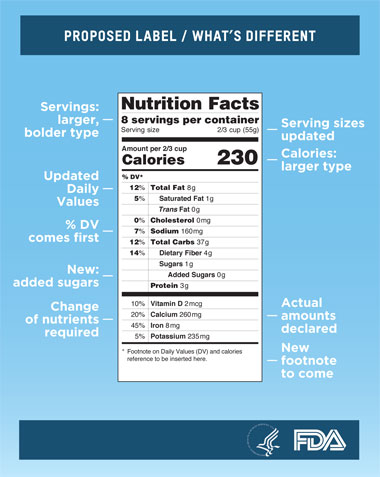
When doing my grocery shopping, there are five major nutrition label elements to which I pay attention.
- Saturated and trans fat. Fat gets a bad rap. But the truth is, not all fats are created equal. And your body does need some essential, good fats to function properly – and that’s why some fats like olive oil can be part of a healthy diet. It’s the saturated and trans fats that you’ll want to limit or avoid. The American Heart Association recommends limiting saturated fats to 7% of total daily calories. If you need 2,000 calories a day, that means 140 calories from saturated fats – which translates to about 16 grams per day. Trans fats should be limited to less than 1% of total daily calories. Based on a 2,000 calorie diet, that’s about 20 calories from trans fats or about 2 grams of trans fats per day. Consuming excessive amounts of these bad fats can increase your bad cholesterol, decrease good cholesterol, increase stroke, heart disease and type II diabetes risk.
- Calories. When it comes to calories, the first thing to understand is your daily caloric requirement. Based on the Harris Benedict Calculator, most people will find that they need between 2,000 and 2,5000 calories a day to stay in a neutral state. Once you know how many calories you need, it’s easier to make smarter choices. Many seemingly innocuous foods and beverages are packed with calories but totally devoid of nutrients. Spend your calories wisely!
- Sugar. Many sugary foods are labeled as fat-free. Marshmallows, for example, are marketed as a fat-free food. And while they don’t contain any fat, they will still make you fat thanks to a very high sugar count. I like to limit sugar to less than 10 grams per portion, especially when it comes to breakfast cereals and smoothies – both of which can be secret sugar bombs. Sugar consumption has been associated with higher levels of bad cholesterol, type II diabetes, weight gain and even aging of the skin.
- Ingredients. Read the ingredients. If you find things that aren’t in your grandmother’s pantry, view it as a red flag. As a general rule, it’s wise to go with food that’s actually food – and not something that’s highly processed and loaded with chemicals. If you can’t even pronounce it, do you really want to eat it? Also, know that there are many ingredients that are really just sugar in disguise (here are 45 other names for sugar). If sugar is high on the ingredient list, opt for something else.
- Serving size. Last but not least, look at the serving size. Marketers are clever; a food may seem healthier because the serving size is ridiculously small. Ice cream servings, for example, are often listed at one half of a cup. When was the last time you ever saw someone eat half a cup of ice cream? You’ll need to adjust the nutrition information depending on the size of the portion you’ll actually eat.
Of course, there are other important aspects of the nutrition label – like fiber content or vitamins and minerals – but these five elements are a great place to start. They’ll set you on a smarter path and help you make some easy upgrades to your diet.
What do you look for on nutrition labels? Let me know in the comments below!