
Best Time to Do Abs in a Workout?

The best time to train your abs is at the end of a workout.

Here’s a question that I get a lot: Is there a best time to train your abs in a workout?

The answer is yes.

First, consider that your abs work constantly – even when you’re engaging other muscles. Your abs fire while doing everything from squats to sprints to shoulder presses and so on. The core works to keep you stabilized and properly supported. Even when walking down the street, you’re using your abs.

Because your abdominal muscles are so important and because they assist in so many movements, it’s best to train your abs the end of your workout session.

If you train your abs at the start of your workout, on the other hand, they could become fatigued – and subsequent exercises may suffer. If your abs can’t assist in a dead lift, for example, you may be unable to lift as much weight. Or, even worse, your form may become compromised and injury could result. In situations like these, fatigued ab muscles can become a limiting factor for non-ab exercises – thereby hampering progress and results.

The bottom line: Save crunches, sit-ups and the like for the end of your workout session. Doing this ensures best results on non-abdominal exercises that require core support.

8 Popular Six Pack Ab Myths.

True story: No two six packs are alike.

If you ask anyone about their fitness goals, six pack abs or a flat stomach are likely to be somewhere on the list. But despite the popularity of this goal, there’s a huge amount of misinformation and a number of popular fallacies.

Today, I’m going to shoot down a number of popular six pack myths to help keep your training program effective and on track.

  1. Myth: You can crunch away the fat on your abs. For most people, the biggest obstacle standing between themselves and a six pack is a layer of fat. Even a thin layer of fat will hide the most developed of abdominal muscles – and doing crunches will do nothing to spot-reduce stomach fat. In fact, the whole notion of spot-reducing fat is a complete fallacy; fat comes off according to its own agenda. Crunches can build your abdominal muscles, but they won’t reduce stomach fat.
  2. Myth: Feeling the burn is all that matters. For individuals looking to build up their ab muscles, it’s important to remember that soreness isn’t required for muscle growth. In fact, soreness is usually simply the result of a new workout routine. Subsequent workouts won’t result in as much (or any) soreness, but that doesn’t mean your muscles aren’t growing. An effective ab workout isn’t measured by how sore you are the next day.
  3. Myth: You need strong abs to have a six pack. Ever see a guy or gal who doesn’t workout, but who sports a fantastic set of six pack abs? For many of these individuals, their chiseled midsection is the result of low body fat percentages. More than developed abdominal muscles, visible six packs have a lot more to do with low body fat – and these individuals were blessed with good genes.
  4. Myth: Fat or diet pills will help you get a sick pack. It’s not worth spending any time on this myth. If you could buy a six pack in a bottle, there would be a lot more people walking around without their shirts on.
  5. Myth: There are shortcuts. Sorry, there aren’t. Depending on your current state of athleticism, your journey to a flat stomach may be longer or shorter – but there really are no shortcuts. Chiseled abs are the result of a workout program designed to target a low body fat percentage (usually the 6% – 13% range) and larger abdominal muscles. There’s no potion, pill or magic spell.
  6. Myth: You can get your six pack to look like that of Christopher Fawcett. Or Ryan Reynolds. Or Colton Haynes. While the models and actors we see in magazines can be great motivators, just like snowflakes, no two six packs are alike. The structure of your abdomen is determined by your genes. And while you can change the size of your muscles through exercise, you can’t change the fundamental layout or structure of your midsection. Your six pack will be uniquely yours.
  7. Myth: You can’t eat carbs if you want a six pack. Carbs are one of the most under-appreciated aspects of a balanced and healthy diet. Indeed, we need carbohydrates for our bodies to function properly, but many people mistakenly believe that carbs load our bodies up with excess body fat. The real emphasis should be placed on eating good, whole, natural and unprocessed carbs – like those found in whole wheat bread, whole wheat pasta, brown rice, etc – rather than the bad carbs found in sugary drinks, white bread, cookies and cakes.
  8. Myth: You need to do hours of cardio to get a six pack. You don’t need to take up marathon running to lean down and showcase your six pack. In fact, as I’ve said before, high intensity interval training – which can last for as little as 10 or 15 minutes – is the best way to boost your metabolism and drop body fat. It takes minutes – not hours.

In life, knowledge is power – and the same can be said for fitness. Just because you’ve heard something, it doesn’t mean that it’s true. It’s important to question everything and to do your research based on real science – rather than what you overheard at the gym.

In the comments below, I’d love to hear some of the true or untrue things that you’ve heard about six packs. Perhaps I’ll do a part II.

How to Get V-Line Abs.

Getting v-line abs requires a combination of low body fat and developed abdominal muscles.

Hey Davey,

I was wondering: How do you get those sexy v-line abs?

Sincerely,
Andrew

Hey Andrew,

That’s a popular question – and I’m glad you asked. Getting a v-cut does require some serious commitment, but there’s no magic to it.

Obtaining v-line abs isn’t something that’s going to happen overnight, and it requires two basic steps. Much like getting lower back dimples, the cuts that make v-lines pop are only visible with a low body fat percentage. Even a thin layer of fat will prevent your v-lines from showing through. The second step involves specifically targeting your lower abdomen muscles during your workouts.

Let’s walk through the two steps in greater detail.

  1. Decrease body fat percentages to the 6% – 13% range for men (and 14% – 20% for women). My body fat percentage, for example, is 8%. And while that doesn’t sound too astounding, body fat percentages in these lower ranges often require hard work and dedication. These are the levels of fat you’d find in elite athletes. There are some formulas that you can use to calculate your body fat – but I’d recommend working with a trainer or professional to determine your starting point.

    One of the most effective ways to decrease fat is by engaging in a high intensity interval training program. As you alternate between intervals of high and medium intensity, you’ll push your metabolism into high gear – and incinerate calories long after your workout ends.

  2. Build lower ab muscles. While obtaining a low body fat percentage is crucial, you’ll obviously need to develop your abdominal muscles – and lower abs, in particular – to achieve the full effect. I created this lower ab workout on YouTube for people who exercise at home:

    If you you have access to a fitness center or gym equipment, try sets of hanging leg raises. Hang from a bar, and lift your straightened legs so that the body folds in half. For a variation, bend your knees and include a twist. Twist on one side, then repeat the exercise by twisting on the other. Be powerful and explosive in your movements.

By both lowering your body fat percentage and developing your lower abdomen muscles, you’ll get the all-elusive v-cut that drives so many of us wild.

Love,
Davey

5-Minute Killer Lower Ab Workout [Video]

When I exercise my abs, I usually break the workouts into three different days. On one day, I do an oblique workout. On the second day, I do a more standard ab workout with crunches, etc. On the third day, I do a workout that targets my lower abs.

With just five minutes, I managed to cram a number of great lower abdominal exercise into today’s YouTube video via my Davey Wavey Fitness YouTube channel. Check out the video and make sure you subscribe to my fitness channel!

To download a professionally workout program with three, 15-minute workouts, check out Davey Wavey’s Get Ripped Workout. Use discount code “core” to save 20% during checkout. And for exercise mats or other equipment, check out www.fitness-mad.com.

How to Get V Cut Abs.

Dear Davey,

What is the best way to get that “V” formation in the navel area? How can I most effectively work that muscle? Thanks.

From,
Jake

Hey Jake!

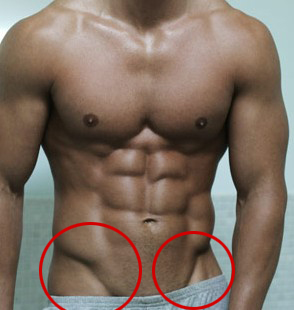
Whether you’re a guy or girl, the so-called v cut is one of the more desired fitness aesthetics. Sometimes called a money maker (no joke), it’s the v-shaped cut in the lower abdominal/pubic region that starts from the obliques and funnels downward toward the groin.

First things first, the v cut is purely aesthetic. As sexy as it is, it isn’t a necessity for general health or physical performance.

Having said that, the formation is caused by a number of oblique and abdominal muscles made visible through a low percentage of body fat. And yes, genetics do play a factor; some people are able to achieve the look with little effort. For the rest of us, it’s hard work.

Obviously, the foundation for having a v cut is well developed abdominal and oblique muscles. There are any number of effective ab and oblique workouts that will build these muscles.

But much like showcasing six pack abs, the v cut is only visible with lower body fat percentages. I recommend meeting with a trainer or healthcare professional to get your body fat measured. Generally, you’ll need to target a number below 10% – which is no small feat.

Once you know your starting body fat percentage, create a plan for reducing it through intense exercise and diet. Diets rich in steamed veggies, lean meats, nuts, healthy salads, fruits, berries and some complex carbohydrates are helpful in reducing body fat. Fried foods, alcohol, pastries, sugary foods and simple carbohydrates (like those found in pasta), are to be minimized.

Though it takes time to lean out, there’s really no magic to achieving the v cut. It’s just a question of how badly you want it – and if you’re willing to put in the work.

Love,
Davey Wavey

Video: Six Pack Secret Exposed!

For the last few weeks, I’ve been participating in YouTube’s Next Trainer program.

As part of the program, we get video assignments. Two weeks ago, we were charged with making a holiday-themed video – and so I made one about the worst holiday foods. This week, we had to create a core-themed video. While an ab workout would be the obvious choice, I thought it would be more interesting to explain why crunches and situps don’t necessarily result in a six pack.

Check out the video and let me know what you think!

Can You Train Abs Everyday?

Hey Davey,

I’ve gotten plenty of tips for workouts from friends in the past but there’s one recurring rumor I keep hearing. To your knowledge, can ab exercises be done everyday? Or do you have to give them rest like you do the other parts of your body such as arms or legs?

From,
Max

Max,

Whether or not abs should be trained everyday is one of the million dollar fitness questions with elaborate theories for and against it.

Opponents of everyday ab training point out that our abs are just like any other muscle in the body – and that they can be overtrained. When we exercise with resistance, our muscles break down. Sufficient time is required for any muscle to rebuild, and so opponents believe that a day (or more) of rest is needed between ab workouts.

Proponents of everyday ab training believe that our abdominal muscles are unique. Because we use these muscles for almost any movement we make, it takes a lot of training to really fatigue these muscles. As such, it takes frequent training sessions for optimal results. And indeed, many bodybuilders do train their abs everyday.

I take a middle-of-the-line approach that combines both philosophies. I train my lower abs on one day, my upper abs on the second and my obliques (side abs) on the third. This gives sufficient rest to each area of my abdomen while still allowing more frequent ab training.

Of course, you’ll have to find what works best for you – and remember that you should never train a muscle that is still sore from a previous workout. Most people will be perfectly fine with 3 – 5 ab workouts per week.

Also keep in mind that, contrary to popular belief, the best way to improve abdominal definition is not with crunches or sit-ups. Any layer of fat (even a very thin one) will hide your six pack, and so it’s crucially important to engage in frequent and effective cardiovascular training (I recommend metabolism-boosting intervals).

I hope that helps!

Love,
Davey
Pilates-Style Ab Workout! [Video]

While I was on my recent week-long Pilates adventure, I learned a new ab exercise called “100s” that I’d like to share with you. It’s powerful, effective and you can do it pretty much anywhere.

It’s important to incorporate new exercises into our routines. It keeps our bodies evolving and helps prevent plateaus – so I’d recommend that you give this one a try.

Watch the video below.

Video: Plank Exercise to Strengthen Core!

Your core muscles inclue all the muscles around your pelvis and trunk (no, not that trunk). Strengthening those muscles should be a part of every fitness program, and it means doing more than the occasional sit-up or crunch.

According to the Mayo Clinic, there are 7 important reasons to exercise your core. Strengthening your core:

  1. Improves balance and stability.
  2. Doesn’t require equipment.
  3. Helps build your abs.
  4. Makes it easier to do most physical activities.
  5. Doesn’t take a lot of time.
  6. Can be done at home – or anywhere else!
  7. Helps you reach your other fitness goals.

In addition, a strong core can help prevent lower back pain and improve your posture.

Now that I’ve sold you on the importance of core-focused exercises, my absolute favorite is the plank. It’s simple but challenging – and there are a lot of variations.

To do a basic plank:

  1. Lie on your stomach.
  2. Push yourself up onto your elbows. Feet should be hip-width apart.
  3. Contract your core muscles to hold this posture for 30 seconds – or more!

I made a quick and simple video to show you some of the variations you can do with the plank:


I’ve included a complete 20-minute core workout in my three-video Jock Workout fitness and nutrition program. Use discount code “blog” before June 7 to save 25% during checkout! Learn more and watch a free preview today!

The Best Lower-Ab Exercise EVER!

When doing a hanging leg raise, it's important to extend the legs all the way up.

Of all the lower ab exercises that exist, one stands out above the rest: The hanging leg raise.

When done right, it’s extremely powerful and effective. Unfortunately, most people quit half-way through each rep – when their legs are only parallel to the floor. To do it right, lift your legs up until they point to the ceiling, and are entirely perpendicular to the floor.

Here’s how to do a proper hanging leg raise:

  1. Locate a vertical bench at your gym. If you don’t have one, then you can do the leg raise while hanging from a pull-up bar (pictured at right).
  2. Raise your legs up as high as possible – much past halfway (anything less is really just a hip flexor exercise). Ideally, your legs should point directly to the ceiling, and the bottom of your spine will curl forward.
  3. Hold for a second, then lower your legs back to the starting position in a controlled manner.
  4. Repeat until fatigued (it shouldn’t take too long!).

Try do do a few sets of hanging leg raises in each of your ab or lower ab workouts.

Also, you may want to try this tip: Once your lower ab muscles become fatigued, simply bend your knees so that your legs are no longer straight. This will make the exercise a bit easier, and continue until your muscles fatigue again.

Give it a try, and let me know what you think!