
8 Popular Six Pack Ab Myths.

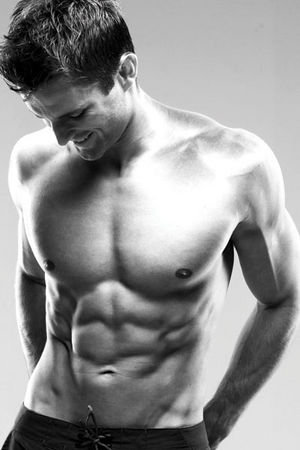
True story: No two six packs are alike.

If you ask anyone about their fitness goals, six pack abs or a flat stomach are likely to be somewhere on the list. But despite the popularity of this goal, there’s a huge amount of misinformation and a number of popular fallacies.

Today, I’m going to shoot down a number of popular six pack myths to help keep your training program effective and on track.

  1. Myth: You can crunch away the fat on your abs. For most people, the biggest obstacle standing between themselves and a six pack is a layer of fat. Even a thin layer of fat will hide the most developed of abdominal muscles – and doing crunches will do nothing to spot-reduce stomach fat. In fact, the whole notion of spot-reducing fat is a complete fallacy; fat comes off according to its own agenda. Crunches can build your abdominal muscles, but they won’t reduce stomach fat.
  2. Myth: Feeling the burn is all that matters. For individuals looking to build up their ab muscles, it’s important to remember that soreness isn’t required for muscle growth. In fact, soreness is usually simply the result of a new workout routine. Subsequent workouts won’t result in as much (or any) soreness, but that doesn’t mean your muscles aren’t growing. An effective ab workout isn’t measured by how sore you are the next day.
  3. Myth: You need strong abs to have a six pack. Ever see a guy or gal who doesn’t workout, but who sports a fantastic set of six pack abs? For many of these individuals, their chiseled midsection is the result of low body fat percentages. More than developed abdominal muscles, visible six packs have a lot more to do with low body fat – and these individuals were blessed with good genes.
  4. Myth: Fat or diet pills will help you get a sick pack. It’s not worth spending any time on this myth. If you could buy a six pack in a bottle, there would be a lot more people walking around without their shirts on.
  5. Myth: There are shortcuts. Sorry, there aren’t. Depending on your current state of athleticism, your journey to a flat stomach may be longer or shorter – but there really are no shortcuts. Chiseled abs are the result of a workout program designed to target a low body fat percentage (usually the 6% – 13% range) and larger abdominal muscles. There’s no potion, pill or magic spell.
  6. Myth: You can get your six pack to look like that of Christopher Fawcett. Or Ryan Reynolds. Or Colton Haynes. While the models and actors we see in magazines can be great motivators, just like snowflakes, no two six packs are alike. The structure of your abdomen is determined by your genes. And while you can change the size of your muscles through exercise, you can’t change the fundamental layout or structure of your midsection. Your six pack will be uniquely yours.
  7. Myth: You can’t eat carbs if you want a six pack. Carbs are one of the most under-appreciated aspects of a balanced and healthy diet. Indeed, we need carbohydrates for our bodies to function properly, but many people mistakenly believe that carbs load our bodies up with excess body fat. The real emphasis should be placed on eating good, whole, natural and unprocessed carbs – like those found in whole wheat bread, whole wheat pasta, brown rice, etc – rather than the bad carbs found in sugary drinks, white bread, cookies and cakes.
  8. Myth: You need to do hours of cardio to get a six pack. You don’t need to take up marathon running to lean down and showcase your six pack. In fact, as I’ve said before, high intensity interval training – which can last for as little as 10 or 15 minutes – is the best way to boost your metabolism and drop body fat. It takes minutes – not hours.

In life, knowledge is power – and the same can be said for fitness. Just because you’ve heard something, it doesn’t mean that it’s true. It’s important to question everything and to do your research based on real science – rather than what you overheard at the gym.

In the comments below, I’d love to hear some of the true or untrue things that you’ve heard about six packs. Perhaps I’ll do a part II.

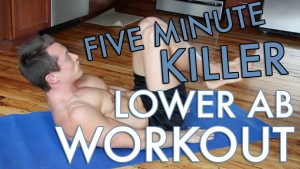
5-Minute Killer Lower Ab Workout [Video]

When I exercise my abs, I usually break the workouts into three different days. On one day, I do an oblique workout. On the second day, I do a more standard ab workout with crunches, etc. On the third day, I do a workout that targets my lower abs.
With just five minutes, I managed to cram a number of great lower abdominal exercise into today’s YouTube video via my Davey Wavey Fitness YouTube channel. Check out the video and make sure you subscribe to my fitness channel!

To download a professionally workout program with three, 15-minute workouts, check out Davey Wavey’s Get Ripped Workout. Use discount code “core” to save 20% during checkout. And for exercise mats or other equipment, check out www.fitness-mad.com.

How to Get V Cut Abs.

Dear Davey,

What is the best way to get that “V” formation in the navel area? How can I most effectively work that muscle? Thanks.

From,
Jake

Hey Jake!

Whether you’re a guy or girl, the so-called v cut is one of the more desired fitness aesthetics. Sometimes called a money maker (no joke), it’s the v-shaped cut in the lower abdominal/pubic region that starts from the obliques and funnels downward toward the groin.

First things first, the v cut is purely aesthetic. As sexy as it is, it isn’t a necessity for general health or physical performance.

Having said that, the formation is caused by a number of oblique and abdominal muscles made visible through a low percentage of body fat. And yes, genetics do play a factor; some people are able to achieve the look with little effort. For the rest of us, it’s hard work.

Obviously, the foundation for having a v cut is well developed abdominal and oblique muscles. There are any number of effective ab and oblique workouts that will build these muscles.

But much like showcasing six pack abs, the v cut is only visible with lower body fat percentages. I recommend meeting with a trainer or healthcare professional to get your body fat measured. Generally, you’ll need to target a number below 10% – which is no small feat.

Once you know your starting body fat percentage, create a plan for reducing it through intense exercise and diet. Diets rich in steamed veggies, lean meats, nuts, healthy salads, fruits, berries and some complex carbohydrates are helpful in reducing body fat. Fried foods, alcohol, pastries, sugary foods and simple carbohydrates (like those found in pasta), are to be minimized.

Though it takes time to lean out, there’s really no magic to achieving the v cut. It’s just a question of how badly you want it – and if you’re willing to put in the work.

Love,
Davey Wavey

5 Tips: Eliminate Neck Pain During Crunches.

Crunch this.

Hey Davey,

Whenever I do crunches, I experience neck pain. What am I doing wrong?

Lots of love,
Collin

Hey Collin,

Crunches are a popular and effective exercise to increase abdominal strength. But when performed with compromised form, crunches can easily lead to neck pain and discomfort.

Here are some tips to maintain good form:

  • Maintain a fist-sized space between your neck and chest. This will decrease strain on the semispinalis and multifidi neck muscles.
  • Don’t tense your neck; keep neck muscles relaxed while crunching.
  • Remember: The lifting motion is done by elevating your shoulder blades off of the floor rather than straining your neck forward.
  • If your arms are behind your head, do not pull on your head. To prevent this, fold your arms across your chest.
  • Stretch your neck muscles! It well help keep them relaxed.

If neck pain persists, then you’ll want to contact a medical professional for attention. And remember, as I shared in a recent YouTube video, it takes more than crunches to create a six pack!

Happy crunching!

Love,
Davey

Video: Six Pack Secret Exposed!

For the last few weeks, I’ve been participating in YouTube’s Next Trainer program.

As part of the program, we get video assignments. Two weeks ago, we were charged with making a holiday-themed video – and so I made one about the worst holiday foods. This week, we had to create a core-themed video. While an ab workout would be the obvious choice, I thought it would be more interesting to explain why crunches and situps don’t necessarily result in a six pack.

Check out the video and let me know what you think!

Pilates-Style Ab Workout! [Video]

While I was on my recent week-long Pilates adventure, I learned a new ab exercise called “100s” that I’d like to share with you. It’s powerful, effective and you can do it pretty much anywhere.

It’s important to incorporate new exercises into our routines. It keeps our bodies evolving and helps prevent plateaus – so I’d recommend that you give this one a try.

Watch the video below.

The Best Lower-Ab Exercise EVER!

When doing a hanging leg raise, it's important to extend the legs all the way up.

Of all the lower ab exercises that exist, one stands out above the rest: The hanging leg raise.

When done right, it’s extremely powerful and effective. Unfortunately, most people quit half-way through each rep – when their legs are only parallel to the floor. To do it right, lift your legs up until they point to the ceiling, and are entirely perpendicular to the floor.

Here’s how to do a proper hanging leg raise:

  1. Locate a vertical bench at your gym. If you don’t have one, then you can do the leg raise while hanging from a pull-up bar (pictured at right).
  2. Raise your legs up as high as possible – much past halfway (anything less is really just a hip flexor exercise). Ideally, your legs should point directly to the ceiling, and the bottom of your spine will curl forward.
  3. Hold for a second, then lower your legs back to the starting position in a controlled manner.
  4. Repeat until fatigued (it shouldn’t take too long!).

Try do do a few sets of hanging leg raises in each of your ab or lower ab workouts.

Also, you may want to try this tip: Once your lower ab muscles become fatigued, simply bend your knees so that your legs are no longer straight. This will make the exercise a bit easier, and continue until your muscles fatigue again.

Give it a try, and let me know what you think!

Six-Pack Tip: Faster Crunches for Ripped Abs.

Tall, dark and delicious! Can I get an amen?!

I’m about to rock your world with some new research. Sit down for this one.

You’ve probably heard that, when it comes to the speed at which you perform strength training exercises, slower is better. The idea behind slow training seems logical. By going slow, you remove all the momentum from your movements – and so all the tension is directly on your muscles. It seems to make sense, but new research is proving otherwise.

It turns out that super slow training is significantly less effective than traditional training. One study showed slow training strength gains of 15% compared to gains of 39% for traditional training.

But wait, there’s more.

Additional research has been done on the variable of speed in abdominal exercises – and crunches, in particular. Researchers divided participants into 4 groups, and had those groups perform crunches at different speeds (1 crunch per 4 seconds, 1 crunch per 2 seconds, 1 crunch per 1.5 seconds, 1 crunch per 1 second). Turns out, the participants in the fastest group – 1 crunch per 1 second – had the highest amount of muscle activation.

In actuality, the results shouldn’t come as much of a surprise. Compare the legs of a marathon runner to the legs of a sprinter. Sprinters, who engage in fast bursts of rapid movement, have very muscular legs.

Of course, this isn’t a green light to rush through all your exercises. But it does mean that increasing the speed at which you crunch can be a good thing. But increase the speed slowly; progressively build up to a faster pace over time. And remember that form shouldn’t be sacrificed for speed!

Newsflash: Ab Workouts Won’t Give You a Flat Stomach.

Yesterday, I was hitting the gym and chatting it up with a new member. He was asking me about a few of the machines, including one that works the obliques (aka side abs). He was totally excited to try the machine out, and explained to me that he’s trying to get rid of his “love handles” and extra fat around his waist.

But alas, the belief that ab exercises will reduce love handles or create a flat stomach is one of the most pervasive exercise misconceptions out there.

Ab exercises build and strengthen abdominal muscles. They do not convert fat tissue into muscle. And they don’t shrink your midsection. In fact, it’s impossible to target parts of the body from which to lose weight.

If you have a belly, and embark on a comprehensive and ass-kicking ab workout, then you’ll likely develop much stronger and bigger ab muscles over time. But those ab muscles will still be hidden under a layer of fat – and even the smallest layer of fat will hide a six pack.

If you want a flat stomach, then you need to do three things:

  1. Cardiovascular exercise. Cardio burns calories during and after exercise. It will help reduce body fat.
  2. Comprehensive strength training. Muscle does wonders to boost the body’s metabolism, so put into practice a total body strength training program. Adding muscle will increase the number of calories your body burns each day.
  3. Proper nutrition. A clean, healthy diet will complement your exercise program and keep body fat to a minimum.

So, if you aspire to showcase a washboard stomach – or just flatten things out a bit – then know that you can crunch your way until kingdom come, and it won’t make a whole lot of difference. Instead, do cardio, strength training and eat right. Simple and easy? No. But it works.

Crazy New Ab Exercise: Double Plate Press!

Truth be told, the double plate press isn’t just an ab workout. It works your chest, forearms, biceps and shoulders – but I feel most of the burn in my abs.

I freaking love it!

Here’s how you do it:

  1. Locate two identical weight plates. Start small – with 5 lb weight plates. You really don’t need a lot of weight to feel this.
  2. Press the two weights together, holding them close to your chest. The smooth side should be facing outward. This is the starting position.
  3. Extend the plates straight out in front of you, so that your arms are parallel to the floor. You’ll really need to squeeze the plates together to prevent them from slipping! This is the most challenge piece of the exercise.
  4. Pause, and then return to the starting position.
  5. If you can do more than 8 or 10 repetitions, you’ll need heavier weights. Repeat for 1 – 4 sets, depending on your goals and available time.

It’s new, it’s different and it’s a lot of fun.

Give it a try, and let me know what you think. And, if you’re up for it – browse some of my additional ab tips and exercises.

Enjoy!